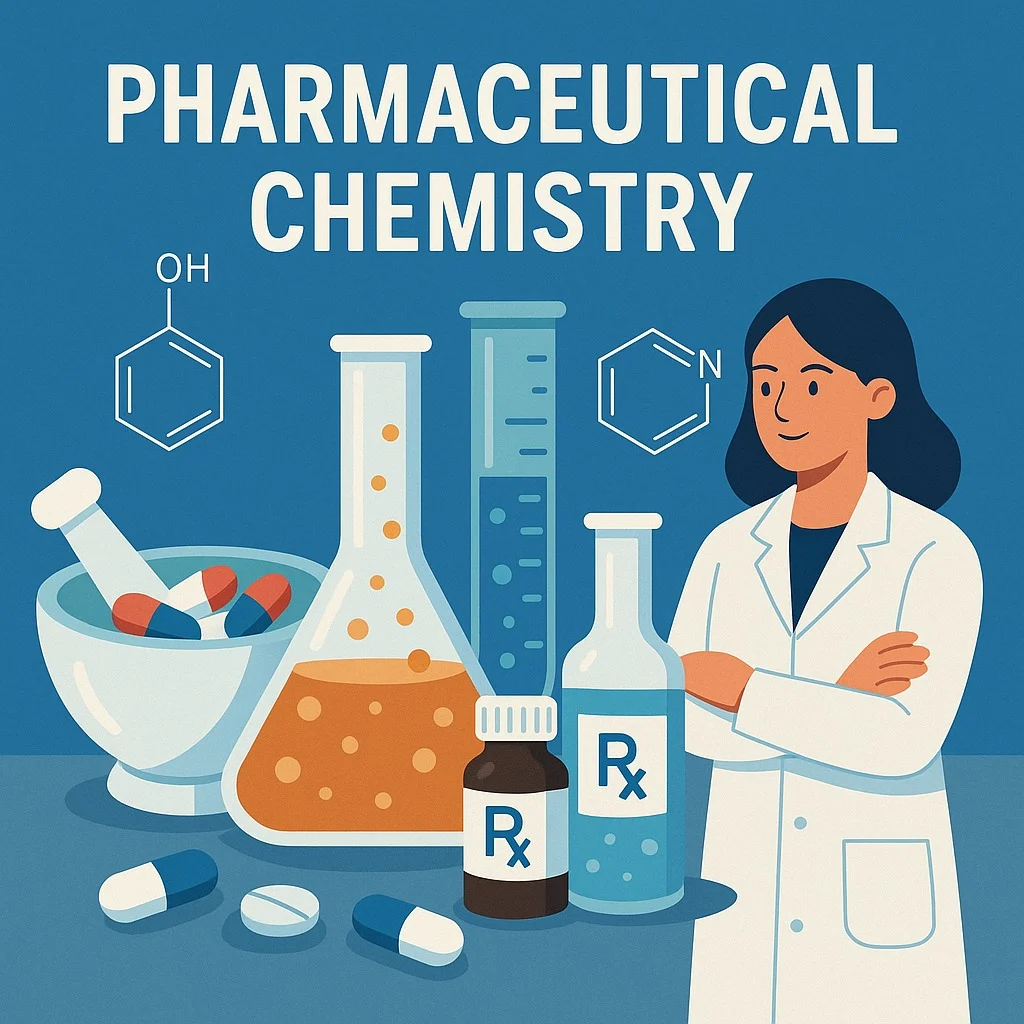
Pharmaceutical chemistry is the study of drugs, and it involves drug development. This includes drug discovery, delivery, absorption, metabolism, and more. There are elements of biomedical analysis, pharmacology, pharmacokinetics, and pharmacodynamics. Pharmaceutical chemistrywork is usually done in a lab setting.
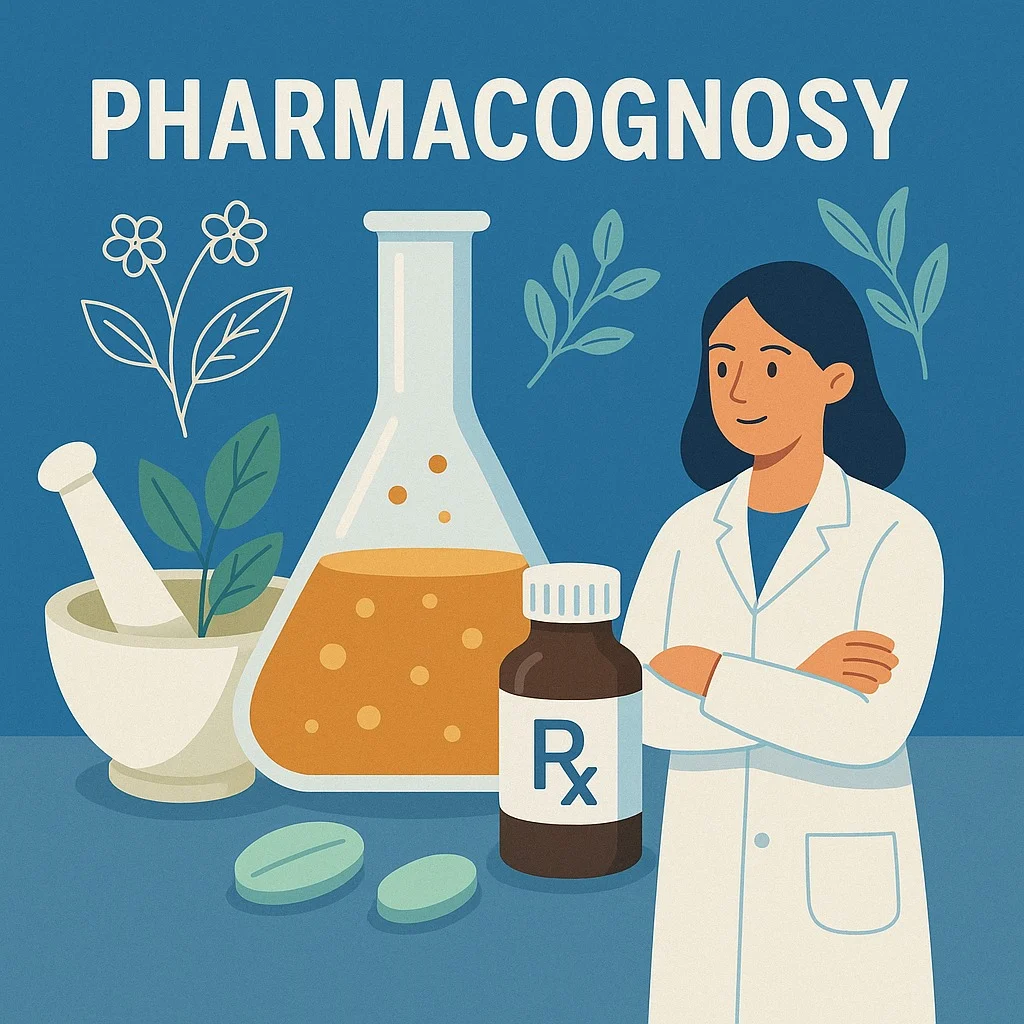
Pharmacognosy is the study of drugs of natural origin. The term comes from two Greek words: "pharmakon" meaning drug or medicine, and "gnosis" meaning knowledge. The American Society of Pharmacognosy defines pharmacognosy as "the study of the physical, chemical, biochemical and biological properties of drugs, drug substances or potential drugs or drug substances of natural origin as well as the search for new drugs from natural sources".
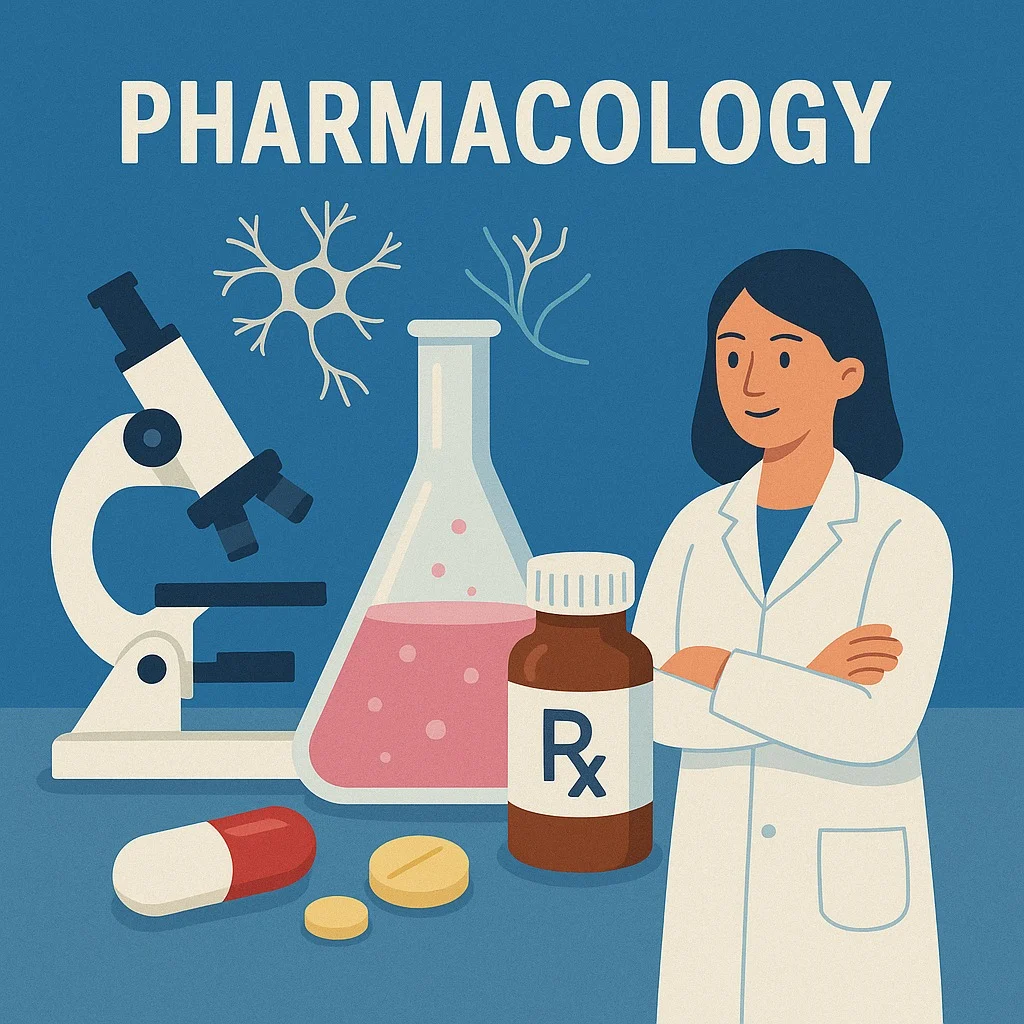
Pharmacology is the science of the drugs system. It includes the knowledge of history, source, biochemical and physiological effect, mechanism of action and therapeutic uses of drug. This means, it is related with the interaction of the drug with biological system.
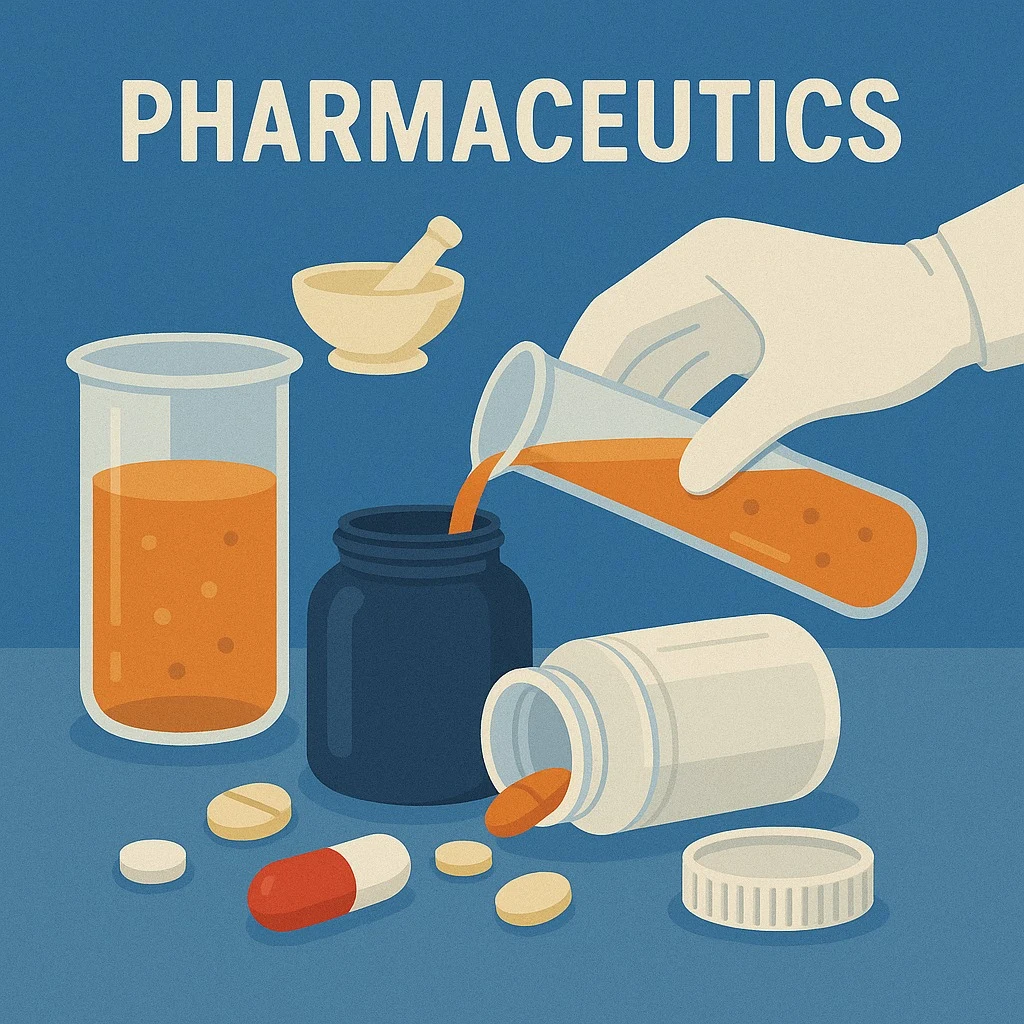
Pharmaceutics is the discipline of pharmacy that deals with the process of turning a new chemical entity (NCE) or old drugs into a medication to be used safely and effectively by patients. It is also called the science of dosage form design.

Pharmacognosy is the study of drugs of natural origin. The term comes from two Greek words: "pharmakon" meaning drug or medicine, and "gnosis" meaning knowledge. The American Society of Pharmacognosy defines pharmacognosy as "the study of the physical, chemical, biochemical and biological properties of drugs, drug substances or potential drugs or drug substances of natural origin as well as the search for new drugs from natural sources".
Pharmaceutical chemistry is the study of drugs, and it involves drug development. This includes drug discovery, delivery, absorption, metabolism, and more. There are elements of biomedical analysis, pharmacology, pharmacokinetics, and pharmacodynamics. Pharmaceutical chemistrywork is usually done in a lab setting.